Wood vs Block Retaining Walls: What Works in Washington Soil
Sloped properties require strong structural support to prevent soil erosion and landscape collapse. Green Day Landscape constructs durable retaining walls that handle the constant moisture and shifting earth found throughout the Pacific Northwest. Property owners frequently default to treated timber for these projects due to upfront material costs and familiar aesthetics. Wood looks natural and blends easily into residential garden spaces.
Trade professionals recognize that timber simply cannot match the performance of engineered materials in consistently damp environments. Saturated ground places immense hydrostatic pressure on retaining structures. Building a concrete block retaining wall Seattle properties need means prioritizing long-term stability over temporary cost savings. The materials you choose directly impact how long the structure remains upright.
What you will find below:
- The reality of timber walls: Why wood struggles in wet earth.
- Hydrostatic pressure: How trapped moisture breaks down materials.
- Concrete block advantages: Engineered strength and reliable drainage.
- Frequently asked questions: Longevity and structural replacement.
The Reality of Timber in Damp Environments
Many homeowners assume wood retaining walls are strong enough for wet soil as long as the timber is pressure treated. The trade reality is that even treated wood eventually breaks down when kept in constant contact with damp earth. Fungi and rot inevitably compromise the cellular structure of the timber.
Once the wood begins to decay, the structural integrity of the entire barrier weakens. Fasteners rust, timbers warp, and the wall slowly leans outward under the weight of the dirt behind it. A wooden barrier requires ongoing monitoring and eventual full replacement once the rotting process reaches an advanced stage.
Understanding Hydrostatic Pressure
Moisture trapped in the ground weighs heavily against any barrier holding it back. In Washington, saturated soil pushes against the backside of a wall with incredible force. This is known as hydrostatic pressure.
Timber barriers lack the rigid strength to resist this pressure permanently. As the wood flexes and bows, the earth behind it shifts. Over time, the continuous pushing and pulling from seasonal moisture changes will push a wooden structure out of alignment entirely. Proper drainage helps, but wood remains a flexible and vulnerable material under immense pressure.
The Engineered Strength of Concrete Block Retaining Wall Seattle Designs
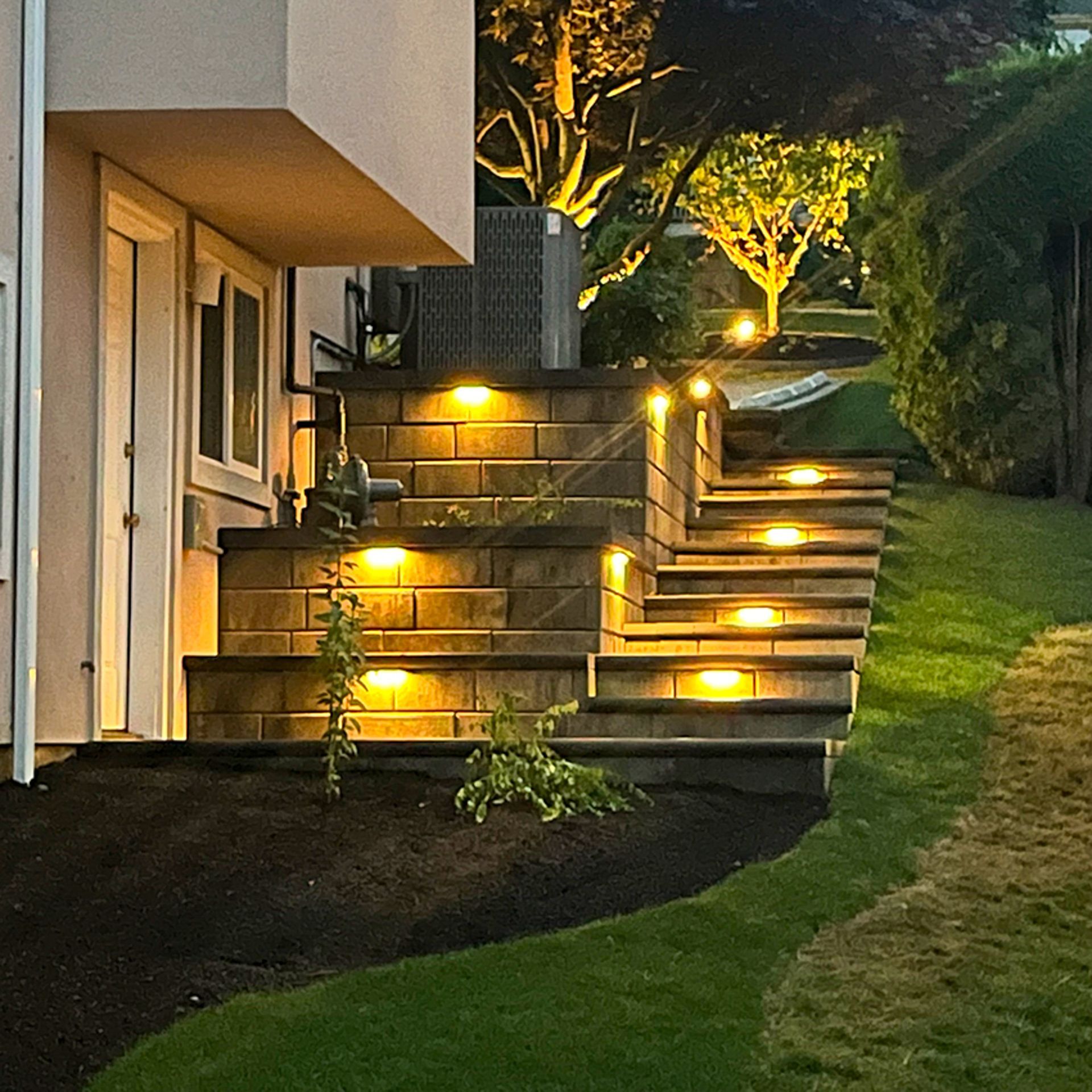
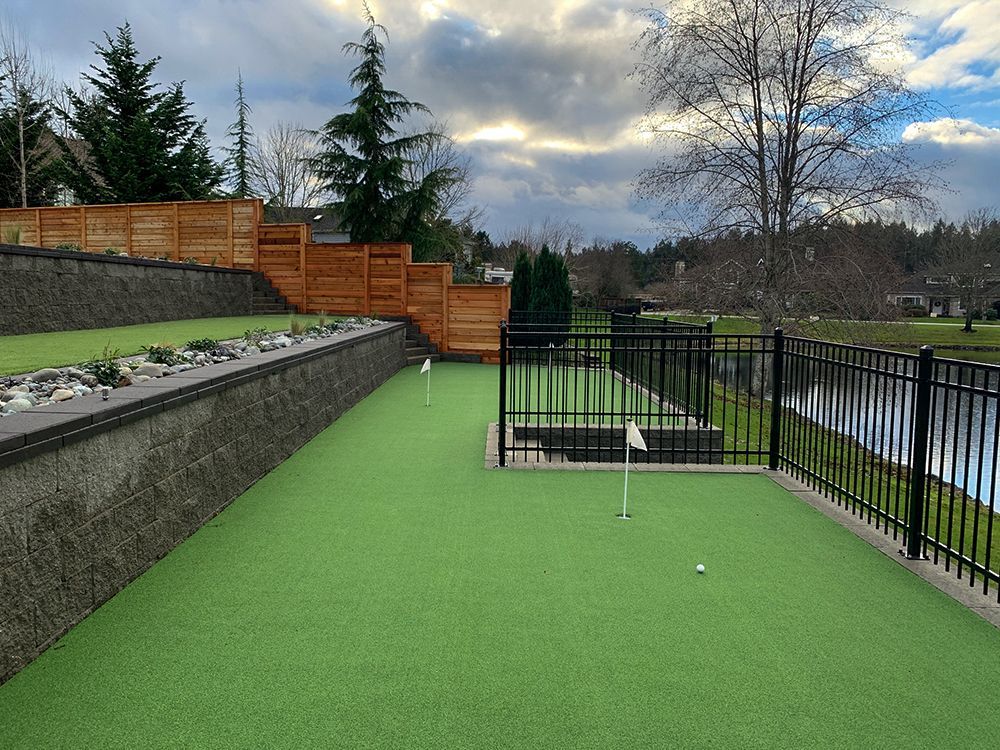
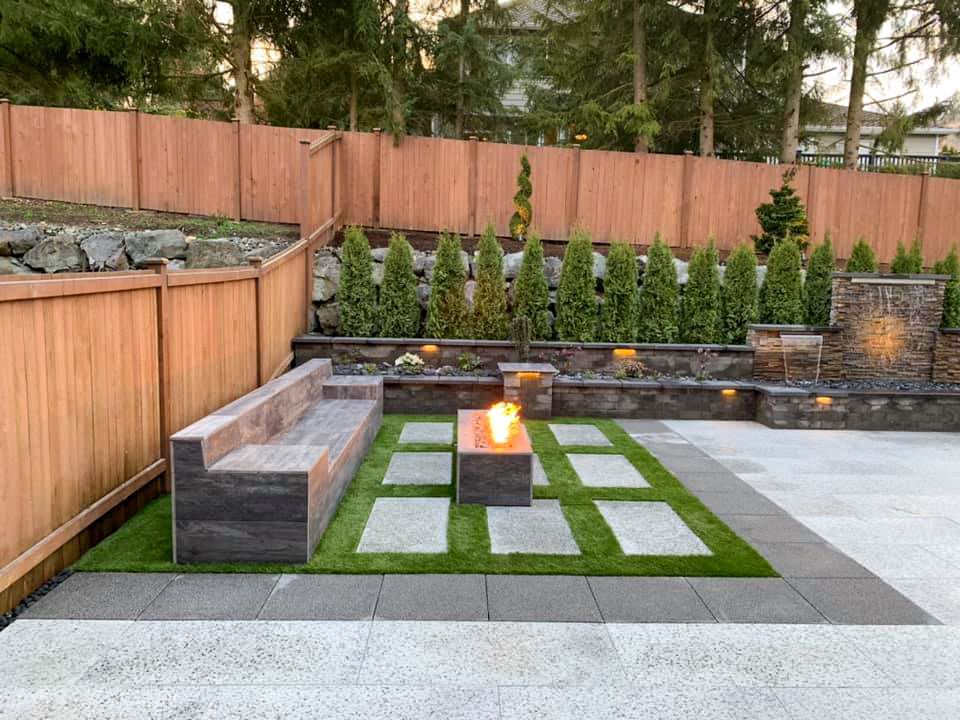
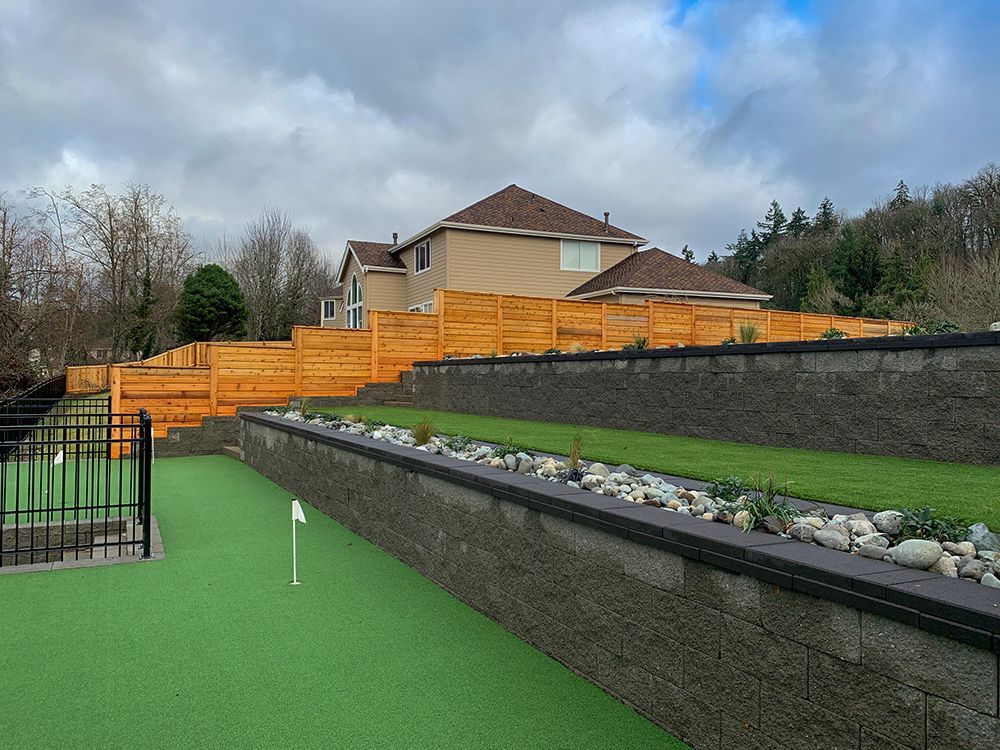
Unlike timber, segmented concrete blocks are manufactured specifically to hold back massive amounts of earth. The individual blocks interlock securely. They rely on their own significant weight and specialized grid tiebacks to create a rigid, immovable barrier.
Concrete does not rot, warp, or attract pests. When we combine robust wall construction with professional concrete installation for your patio surfaces, the entire landscape gains lasting stability. The segmented design of block structures also allows for micro adjustments as the ground settles. This prevents the severe cracking that often plagues solid poured walls.
Proper backfilling with crushed gravel ensures that moisture drains quickly away from the block structure. This engineered drainage approach relieves hydrostatic pressure safely. It protects the surrounding landscape and any nearby paver surfaces from shifting due to soil erosion.
Frequently Asked Questions
How long does a timber retaining wall actually last?
Depending on the soil conditions and the quality of the timber, a wooden barrier typically lasts ten to fifteen years before requiring replacement. In heavily saturated ground, that lifespan can be significantly shorter.
Do block walls require specialized drainage?
All retaining barriers require proper drainage. We install perforated drain pipes and use clean gravel backfill behind every block structure to ensure moisture escapes quickly and safely without building pressure.
Securing Your Sloped Property
Upgrading to a block structure protects your landscape investment from the inevitable wear caused by our regional climate. Choosing engineered materials ensures your sloped yard remains stable and visually striking for decades. Reach out to our crew to discuss replacing a failing timber barrier or designing a new structural layout for your yard.
Share This Blog